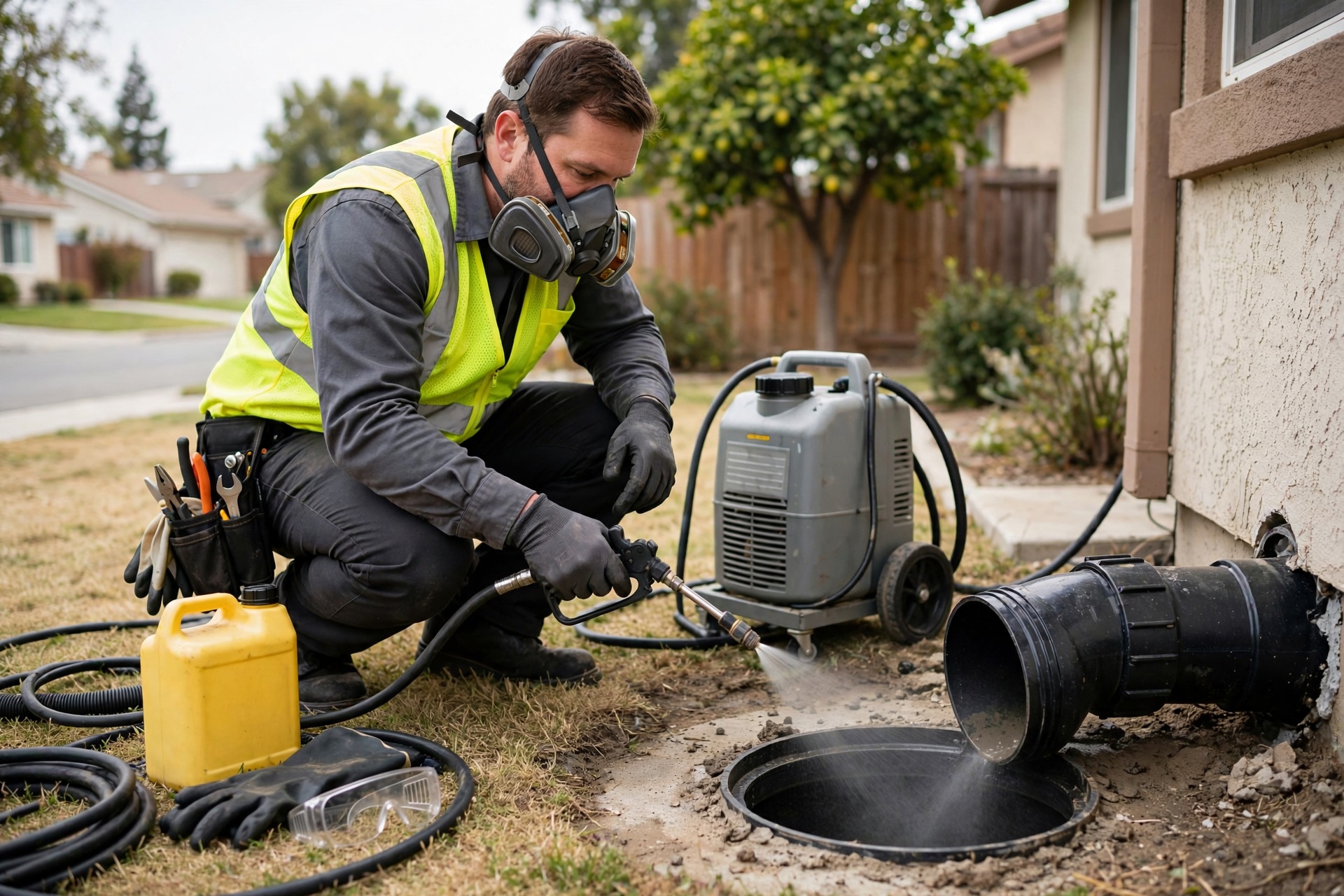
Sewage odors in Citrus Heights often stem from backups that migrate through older plumbing common in Sylvan Old Auburn and Downtown neighborhoods. Hot-summer Mediterranean conditions accelerate bacterial growth in moist soil and crawlspaces, making odors return quickly if source material is not fully extracted. Technicians use negative-air machines and EPA-registered neutralizers to break down organic residues rather than masking them, especially important after heavy winter rains that raise groundwater levels in Sacramento County.
Properties near Rusch Park and the Citrus Heights Community Center frequently sit on flat terrain with clay-heavy soils that trap moisture, allowing hydrogen sulfide to linger in wall cavities and under slab foundations. In these cases, simple fan drying fails and can push contaminated air into living spaces. Full removal requires cutting access points, applying oxidizers to concrete and wood, and sealing porous surfaces to prevent re-emission during the next warm spell.
Nearby cities like Roseville and Orangevale share similar aging housing stock, but Citrus Heights homes built before 1980 often have cast-iron drains that corrode and leak under driveways and patios. Odor complaints spike after mild winters when residents first open windows, revealing smells that traveled from a neighbor's line or a shared sewer lateral.
Regulatory notes for Sacramento County require proper disposal of extracted waste at approved facilities; crews document chain of custody when crossing into Roseville or Orangevale service zones. Homeowners should avoid bleach-based cleaners, which can create toxic gases when mixed with remaining sewage residues.
Technician insight
In Citrus Heights the thing that catches most people out with sewage odor removal is how quickly hot summer temperatures reactivate smells in the clay soils around older Sylvan Old Auburn foundations; homeowners often try fans first, which just spreads the gas into living areas instead of extracting it at the source.
Downtown Citrus Heights Backup Odor
A homeowner in Downtown Citrus Heights reported a persistent rotten-egg smell after a mild winter rain. Inspection found sewage had wicked under the slab from a corroded cast-iron line. Crews extracted liquid, treated the concrete with oxidizers, and sealed the surface; odors did not return during the following heat wave.
Sewage Odor Removal Services We Offer
✓Crawlspace Odor Extraction
Removes trapped sewage gases from underfloor areas common in Sylvan Old Auburn homes by installing negative pressure and applying enzymatic treatments to soil.
✓Wall Cavity Deodorization
Targets odors that have migrated into drywall and insulation after backups in Downtown Citrus Heights properties using targeted injection of oxidizers.
✓Concrete Slab Treatment
Neutralizes hydrogen sulfide absorbed into garage and basement slabs typical of Rusch Park residences with penetrating sealers and extraction.
✓Carpet and Subfloor Removal
Extracts contaminated padding and wood subfloors in older Sacramento County homes where sewage has wicked upward, preventing hidden odor sources.
✓HVAC Duct Cleaning After Backup
Cleans and sanitizes forced-air systems that have circulated sewage odors through homes near the Citrus Heights Community Center.
Sewage Odor Removal Cost in Citrus Heights, CA
| Service | Typical Range | What Affects It |
|---|---|---|
| Initial Odor Assessment | $150–$300 | Includes moisture mapping in crawlspaces and slab edges |
| Crawlspace Extraction And Treatment | $800–$1,800 | Higher when clay soil retains moisture after winter rains |
| Wall Cavity Neutralization | $600–$1,200 | Varies with number of affected rooms in pre-1980 homes |
| Concrete Slab Sealing | $400–$900 | Larger garages near Rusch Park increase scope |
Pricing confirmed on-site before work begins. Call 24/7 for immediate dispatch.
How it works
- 1
On-Site Assessment
Technician inspects affected zones including crawlspaces and slab edges to map odor migration paths.
- 2
Containment And Extraction
Negative air machines isolate the space while liquid and solid residues are removed and hauled to approved disposal sites.
- 3
Neutralization Application
Enzymatic and oxidizing agents are applied to concrete, soil, and wood to break down odor-causing compounds.
- 4
Verification And Sealing
Air quality readings confirm removal before porous surfaces are sealed to block future re-emission.
Pricing
Costs depend on square footage affected, depth of contamination into subfloors or walls, and whether HVAC systems require cleaning.